5.4 — Fats
Composition, States and Sources
- Fat is an organic carbon compound containing carbon, hydrogen and oxygen.
- Fat is an important class of food in the human diet.
- Fats exist as solids or liquids:
- Solid fats at room temperature usually come from animals such as chicken, cow, goat and fish.
- Liquid fat is called oil and normally comes from plants, such as palm oil, coconut oil and soya bean oil.
Saturated and Unsaturated Fats
Similarities
- Organic compounds containing carbon, hydrogen and oxygen.
- Insoluble in water.
- Important sources of fatty acids in the body.
| Saturated fat | Unsaturated fat |
|---|---|
| Mainly from animals | Mainly from plants |
| Solid at room temperature | Liquid at room temperature |
| High melting point | Low melting point |
| Maximum number of hydrogen atoms in the molecule | Number of hydrogen atoms in the molecule is not maximum |
| Cannot accept additional hydrogen atoms | Can accept additional hydrogen atoms |
Effects of Excessive Fat Intake on Health
- Fat is an important component of a balanced diet, but excessive fat—especially saturated fat—raises blood cholesterol.
- Animal sources such as cheese, eggs, butter and meat contain high levels of cholesterol.
Importance of cholesterol
- Builds body-cell membranes.
- Used to synthesise bile and sex hormones.
- Used to produce vitamin D in skin exposed to sunlight.
Effects of excessive cholesterol
- Gallstones and jaundice: cholesterol forms gallstones that block the bile duct; a blocked bile duct can cause jaundice.
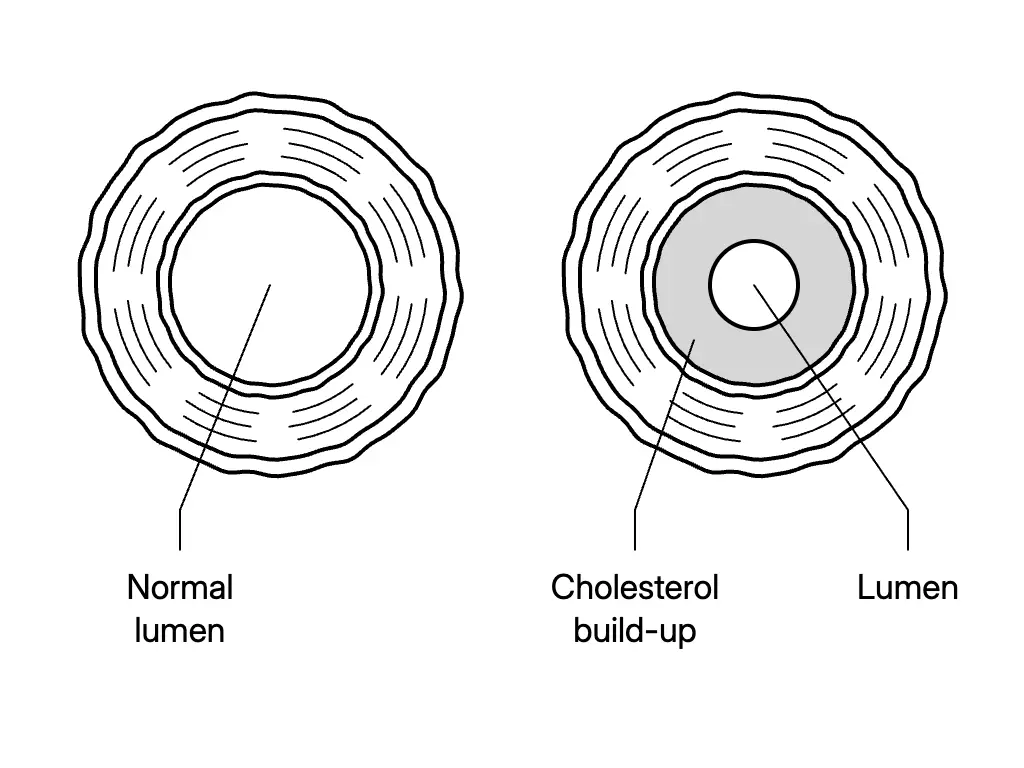
- Atherosclerosis: cholesterol deposits on the inner artery wall and narrows the lumen, disrupting or blocking blood flow.
- Atherosclerosis can cause hypertension, stroke—when an artery leading to the brain is blocked or bursts—and a potentially fatal heart attack.
Prevention
- Reduce saturated-fat intake.
- Consume unsaturated fats, which can lower blood cholesterol levels.
Answer practice questions to test your knowledge
Practice