5.1 Cell Division
Gene, Deoxyribonucleic Acid (DNA) and Chromosome
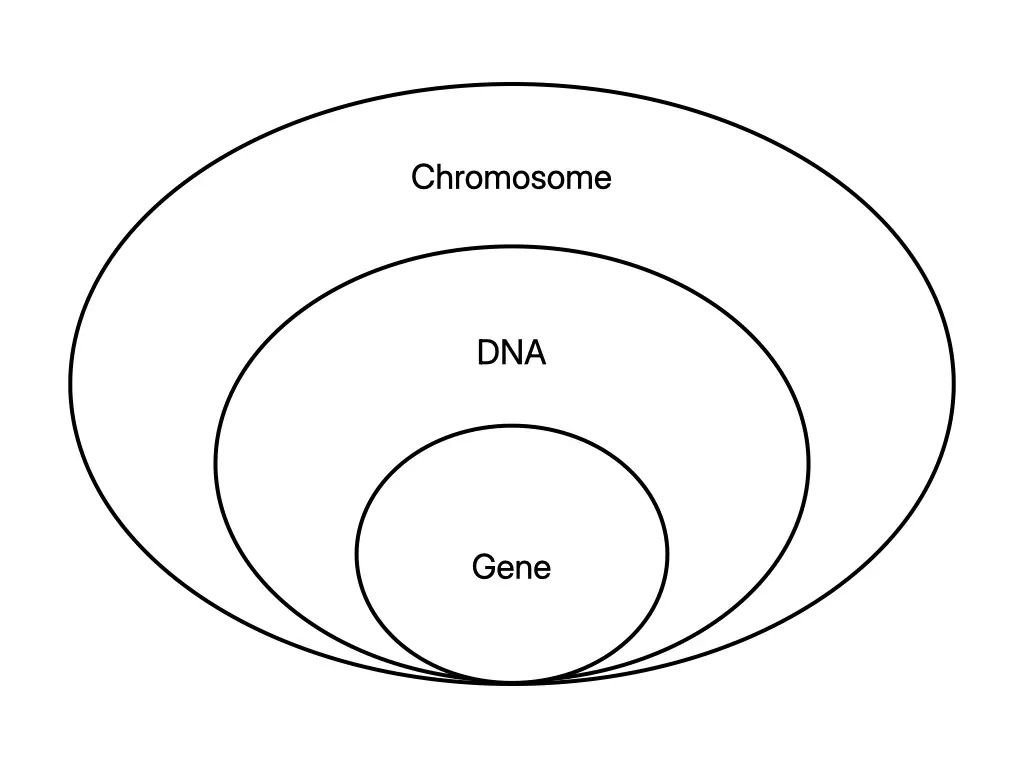
- Genetics: the study of genes, inheritance and variation in organisms.
- Nucleus: cell structure that controls all cell activities; it contains chromosomes.
- Chromosome: a long, coiled, fine thread-like structure made of nucleic acid and protein, located in the nucleus.
- Each chromosome contains one long DNA molecule.
- A chromosome that has replicated consists of two sister chromatids joined at a centromere.
- Deoxyribonucleic acid (DNA):
- consists of basic units called nucleotides;
- each nucleotide contains deoxyribose sugar, a nitrogenous base and a phosphate group;
- two antiparallel polynucleotide chains twist around each other to form a double helix.
- Gene: the basic unit of inheritance that determines an individual’s characteristics.
- Controls inherited characteristics such as the ability to roll the tongue in humans, pea-seed shape and cat-fur colour.
- Arranged as a segment of DNA along a chromosome.
- Thousands of genes occur in one DNA molecule; each chromosome may carry up to 200–300 types of genes.
Structural relationship:
Cell → nucleus → chromosome → DNA → gene (a segment of DNA)
Human Chromosomes and Karyotype
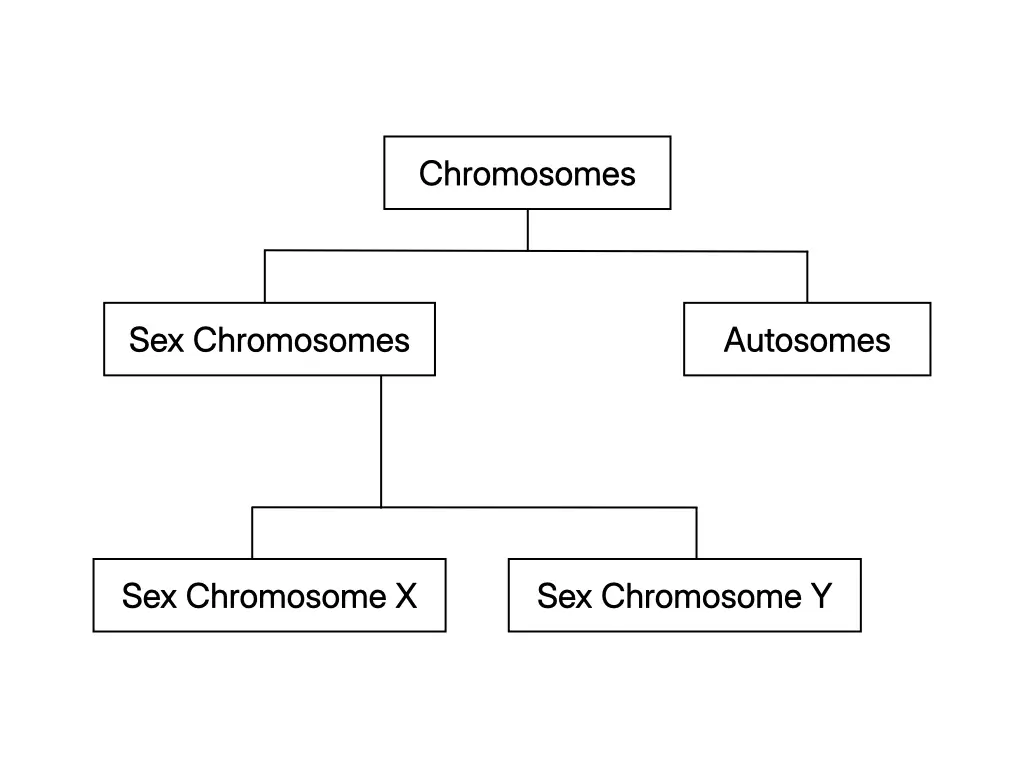
- Every species has a fixed number of chromosomes.
- A normal human somatic cell contains 46 chromosomes.
- Chromosomes occur in pairs of similar shape and size. Each pair is called a pair of homologous chromosomes.
- A karyotype is an arrangement of homologous chromosomes according to their shape and size.
- Human chromosomes comprise:
| Type | Function and number |
|---|---|
| Autosomes | Carry genes controlling characteristics such as eye colour, ability to roll the tongue and hair type; 44 autosomes (22 pairs) in a somatic cell |
| Sex chromosomes | Carry genes that determine sex; XX in females and XY in males |
- Human somatic cells: 46 chromosomes.
- Human gametes—sperm and ovum: 23 chromosomes.
Mitosis and Meiosis
- Interphase occurs before mitosis or meiosis:
- DNA replicates;
- the cell grows and prepares for cell division.
Mitosis
- Mitosis is cell division that produces two identical daughter cells.
- Each daughter cell has the same chromosome number and genetic content as the parent cell.
- Occurs in somatic cells of humans and animals and meristematic tissues at plant root tips and shoot tips.
- Prophase: chromosomes shorten, thicken and become visible; each consists of two sister chromatids joined at the centromere; spindle fibres form; nuclear membrane and nucleolus disintegrate.
- Metaphase: chromosomes line up at the equatorial plane; spindle fibres attach to centromeres.
- Anaphase: centromeres divide; sister chromatids separate and move to opposite poles.
- Telophase: chromatids reach opposite poles; nuclear membrane and nucleolus reform; cytoplasm divides; two daughter cells with the same chromosome number and genetic information as the parent cell form.
Meiosis
- Meiosis is cell division that produces four non-identical daughter cells.
- Each daughter cell contains half the chromosome number of the parent cell.
- Occurs in reproductive organs to produce gametes: human testes and ovaries; plant anthers and ovaries.
Meiosis I
- Prophase I: chromosomes shorten, thicken and become visible; homologous chromosomes pair; crossing over exchanges genetic information between homologous chromosomes.
- Metaphase I: homologous chromosomes line up at the equatorial plane; spindle fibres attach to centromeres.
- Anaphase I: homologous chromosomes separate and move to opposite poles.
- Telophase I: cytoplasm divides; the first meiotic division ends.
Meiosis II
- Prophase II: spindle fibres begin to form.
- Metaphase II: chromosomes line up at the equatorial plane; spindle fibres attach to centromeres.
- Anaphase II: centromeres divide; sister chromatids separate and move to opposite poles.
- Telophase II: nuclear membranes and nucleoli reform; cytoplasm divides; four non-identical daughter cells (gametes), each with half the parent-cell chromosome number, form.
Comparison of Mitosis and Meiosis
| Mitosis | Meiosis |
|---|---|
| DNA replicates before cell division | DNA replicates before cell division |
| Produces 2 daughter cells | Produces 4 daughter cells |
| No crossing over | Crossing over occurs |
| No genetic variation | Genetic variation occurs |
| Daughter cells are genetically identical | Daughter cells are genetically different |
| Daughter-cell chromosome number equals that of the parent cell | Daughter-cell chromosome number is half that of the parent cell |
| Occurs in somatic cells | Occurs in reproductive cells |
Importance of Mitosis and Meiosis
Mitosis is important for:
- growth of organisms, including growth at plant root tips;
- replacement of damaged or dead cells, such as formation of new skin cells to heal a wound;
- asexual reproduction in certain organisms such as Amoeba sp.; the new cells are identical to the parent cell.
Meiosis is important for:
- production of gametes for sexual reproduction.
Answer practice questions to test your knowledge
Practice