1.2 - Resolution of Forces
Two Perpendicular Components
- Resolution of forces separates a single force into components. Use two perpendicular components, usually horizontal and vertical.
- In tarik upih, an inclined pull has a horizontal component that overcomes friction and a vertical component that helps balance weight together with the normal reaction.
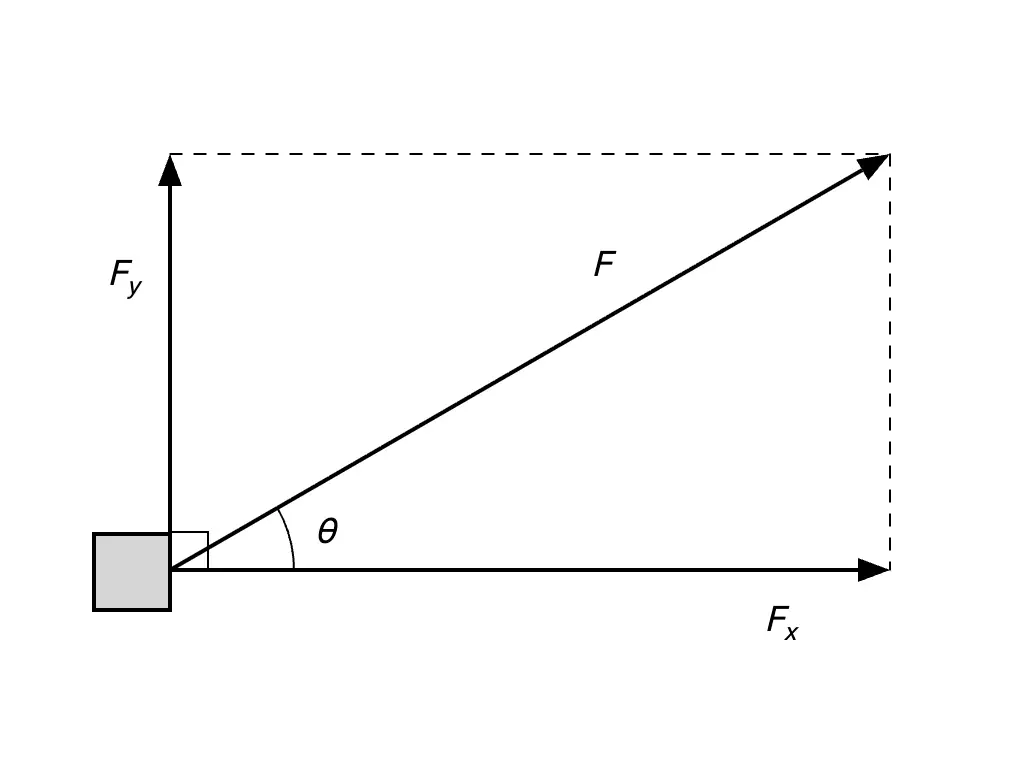
- For force at angle above the horizontal, the force is the diagonal of a rectangle with sides and :
- acts horizontally and vertically. Identify the angle’s reference direction before choosing sine or cosine.
Pushing and Weight on an Incline
- When mopping a floor, a 32 N pushing force at below the horizontal has a horizontal component along the floor and a vertical component downwards.
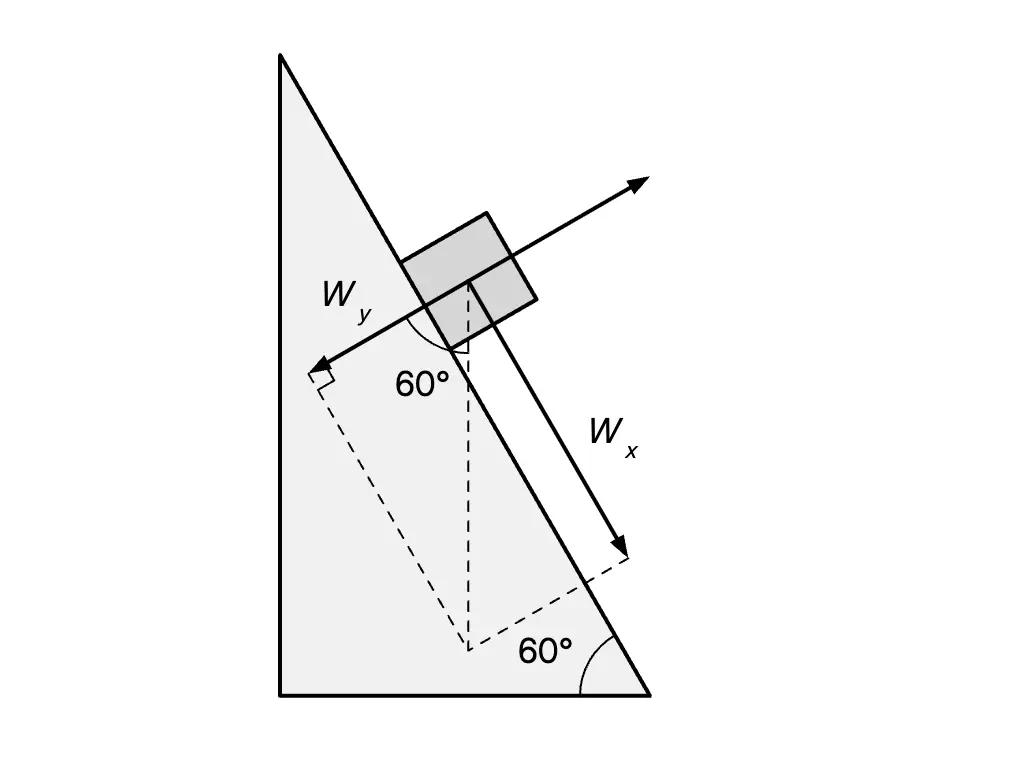
- A child of weight 300 N on a slide inclined at experiences weight vertically downwards. Resolve it into components parallel and perpendicular to the slide.
- For a plane inclined at to the horizontal:
- The angle between the weight and its perpendicular component equals the plane’s angle of inclination.
Worked Example: Inclined Pull on a Block
- A 2.4 kg block experiences pull at above the horizontal, weight , normal reaction and opposing friction .
- Combine forces separately along each direction:
- Resultant force: 11.18 N to the right. Acceleration:
Worked Example: Smooth Inclined Plane
- A 2.4 kg block slides down a smooth plane inclined at . Its weight is 24 N and normal reaction is 12 N.
- Perpendicular forces balance: .
- The resultant is 20.78 N down the plane:
Answer practice questions to test your knowledge
Practice