3.1 - Heat Change in Reactions
Exothermic and Endothermic Reactions
Chemical reactions normally involve heat energy being released or absorbed.
| Exothermic reaction | Endothermic reaction |
|---|---|
| Releases heat to the surroundings. The surrounding temperature rises and the container becomes hot. | Absorbs heat from the surroundings. The surrounding temperature falls and the container becomes cold. |
| Examples: respiration, oxidation of metals, neutralisation, combustion of fuel, production of ammonia and dissolving sodium hydroxide in water. | Examples: photosynthesis, thermal decomposition of metal carbonates or metal nitrates, and dissolving ammonium salts in water. |
- Alcohol evaporation in hand sanitiser absorbs heat, making the hand feel cold. Detergent powder in contact with water releases heat, making the hand feel warm.
Heat Change When Substances Dissolve
- Heat changes during dissolution can be identified from the initial temperature and the highest or lowest temperature of the mixture.
- The comparison uses of distilled water and one spatula of solid sodium hydroxide, , ammonium nitrate, , sodium thiosulphate, , or anhydrous calcium chloride, .
- A lidded polystyrene cup, thermometer, measuring cylinder and spatula are used; the water is left with the thermometer for two minutes before its initial temperature is taken, and the mixture is stirred carefully.
- A temperature rise indicates heat release; a temperature fall indicates heat absorption.
- Precaution: Sodium hydroxide is corrosive and requires careful handling.
Heat of Reaction and Energy Level Diagrams
- Heat of reaction, , is the heat change when one mole of reactant reacts or one mole of product forms. Its unit is .
- is negative when heat is released; the reaction is exothermic.
- is positive when heat is absorbed; the reaction is endothermic.
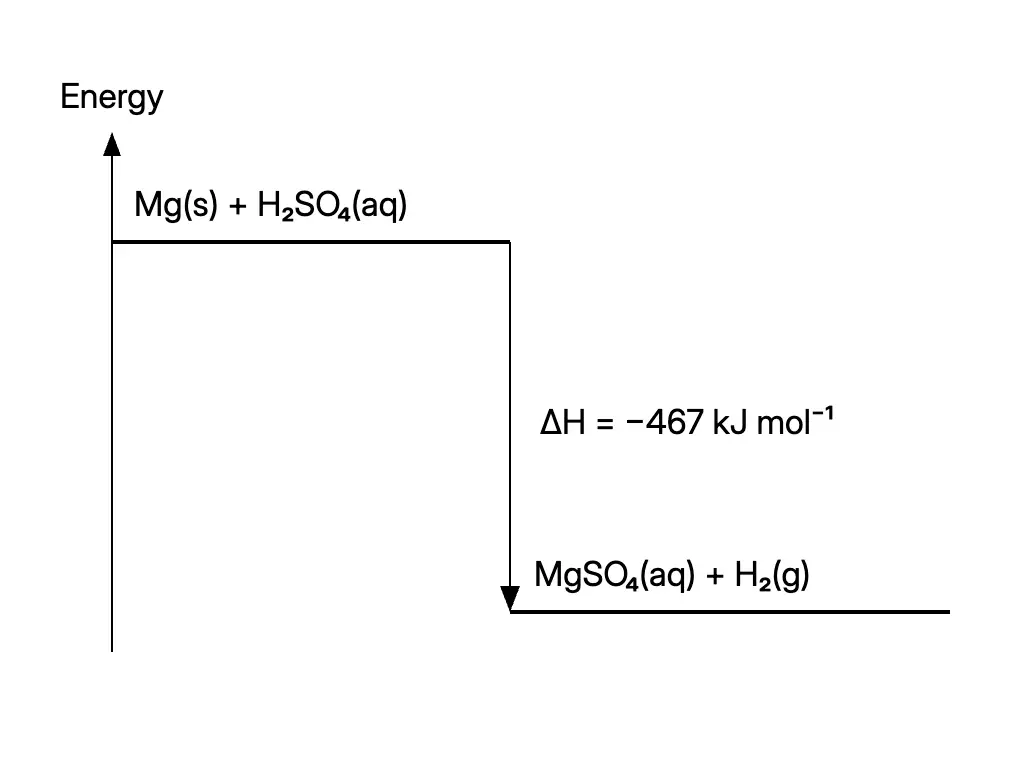
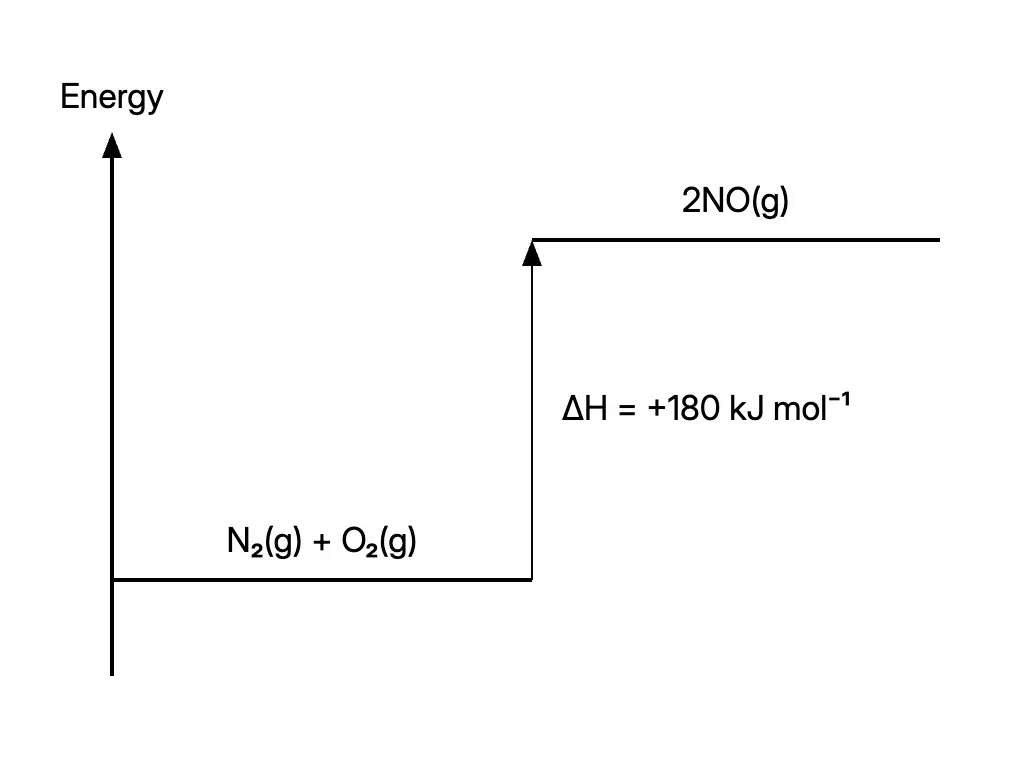
- An energy level diagram shows the difference between the heat-energy content of the reactants and products:
| Feature | Exothermic | Endothermic |
|---|---|---|
| Relative energy level | Products lower than reactants | Products higher than reactants |
| Direction of arrow | Downwards, from reactants to products | Upwards, from reactants to products |
| Sign of | Negative | Positive |
| Temperature of mixture | Increases | Decreases |
Exothermic example:
The products have lower total energy than the reactants; is released when the equation reacts in the stated molar amounts.
Endothermic example:
The product has higher total energy than the reactants; is absorbed when the equation reacts in the stated molar amounts.
To construct an energy level diagram, label the vertical axis Energy, draw and label the reactant and product levels, draw the arrow from the reactant level to the product level, and write its sign, value and unit.
Energy Change During Bond Breaking and Bond Formation
- Breaking bonds in reactants absorbs heat energy.
- Forming new bonds in products releases heat energy.
- An exothermic reaction releases more energy during bond formation than it absorbs during bond breaking.
- An endothermic reaction absorbs more energy during bond breaking than it releases during bond formation.
For :
| Bond process | Energy change |
|---|---|
| Break one H–H bond and one Cl–Cl bond | Absorb |
| Form two H–Cl bonds | Release |
The net heat change is , so the reaction is exothermic.
Answer practice questions to test your knowledge
Practice