3.1 - Structure of Plasma Membrane
The Necessity of Movement of Substances Across a Plasma Membrane
- Living cells take in substances from the external environment to carry out living processes.
- Metabolic processes produce waste that must be disposed of from cells.
- The plasma membrane regulates the movement of substances into and out of cells.
The Fluid Mosaic Model
- Protein molecules float in the phospholipid bilayer and form an ever-changing mosaic pattern.
- The phospholipid bilayer, proteins and cholesterols are not static; they form a dynamic, flexible structure that gives the membrane its fluid characteristic.
- The fluid mosaic model proposed by S. J. Singer and G. L. Nicolson in 1972 is the model accepted by scientists.
Components of the Plasma Membrane
Phospholipid Bilayer
- Each phospholipid has:
- a polar, hydrophilic head attracted to water;
- a nonpolar, hydrophobic tail that repels water.
- Heads in the outer layer face the extracellular fluid; heads in the inner layer face the cytoplasm.
- Tails of the two layers face each other.
Membrane Proteins
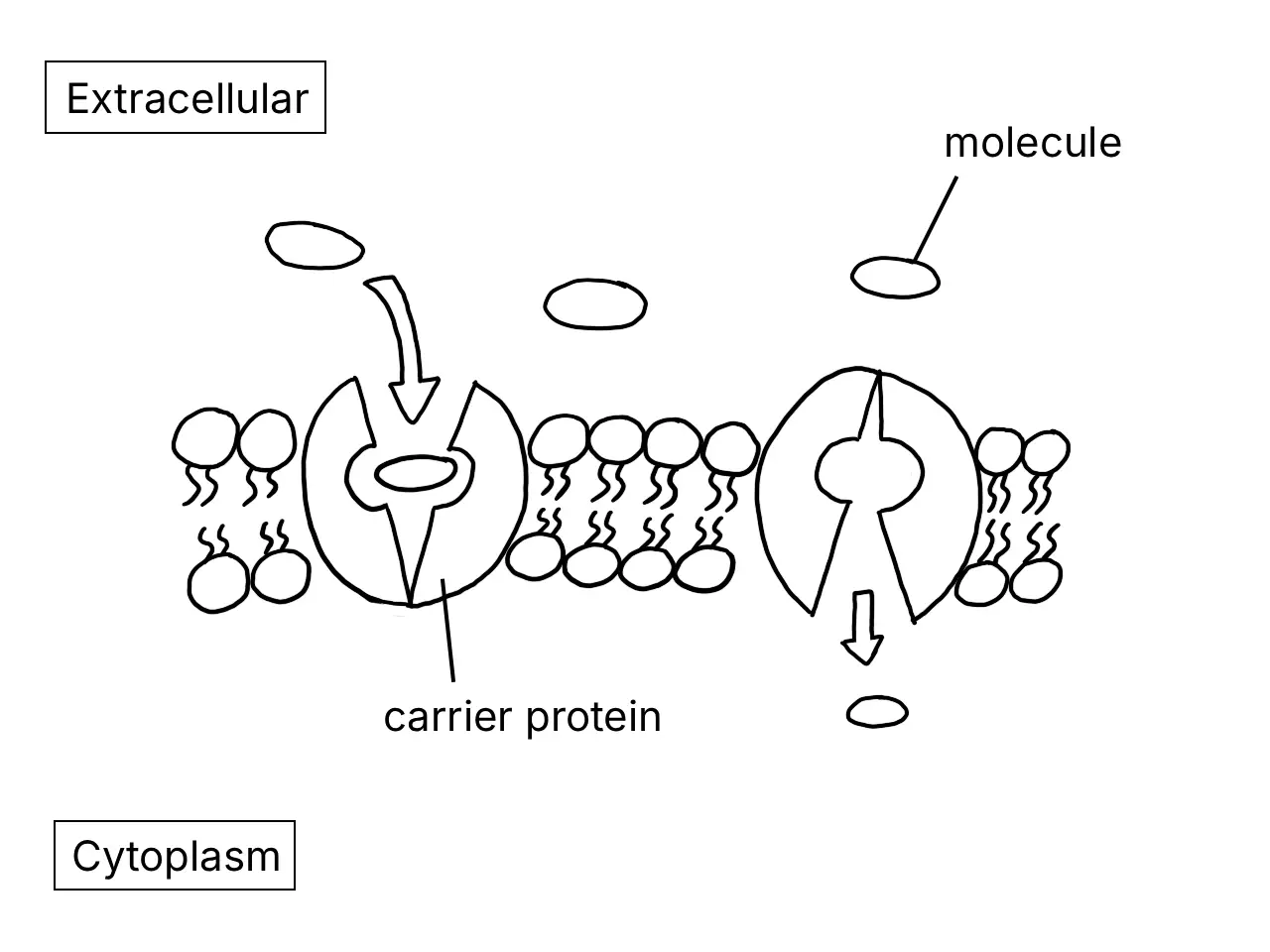
- Protein molecules are embedded partially or fully and widely dispersed in the phospholipid bilayer.
- Channel proteins contain channels or canals.
- Carrier proteins function as carriers.
Glycoproteins and Glycolipids
- Glycoprotein: a protein with an attached carbohydrate chain.
- Glycolipid: a lipid with an attached carbohydrate chain.
- Both:
- act as receptors for hormones such as insulin;
- stabilise the membrane by forming hydrogen bonds with water;
- act as antigens for cell identification.
Cholesterol
- Cholesterol molecules lie between phospholipid molecules.
- They make the phospholipid bilayer stronger, more flexible and less permeable to water-soluble substances such as ions.
Permeability of the Plasma Membrane
- A membrane is permeable to a substance when it allows the substance to move across freely; it is impermeable when the substance cannot move across.
- The plasma membrane is selectively permeable: it allows the free movement of certain substances but prevents or limits the movement of others.
- The phospholipid bilayer and proteins determine permeability to specific substances.
Answer practice questions to test your knowledge
Practice