Coordination and Response in Humans
12.3 - Neurones and Synapse
Basic Structure of a Neurone
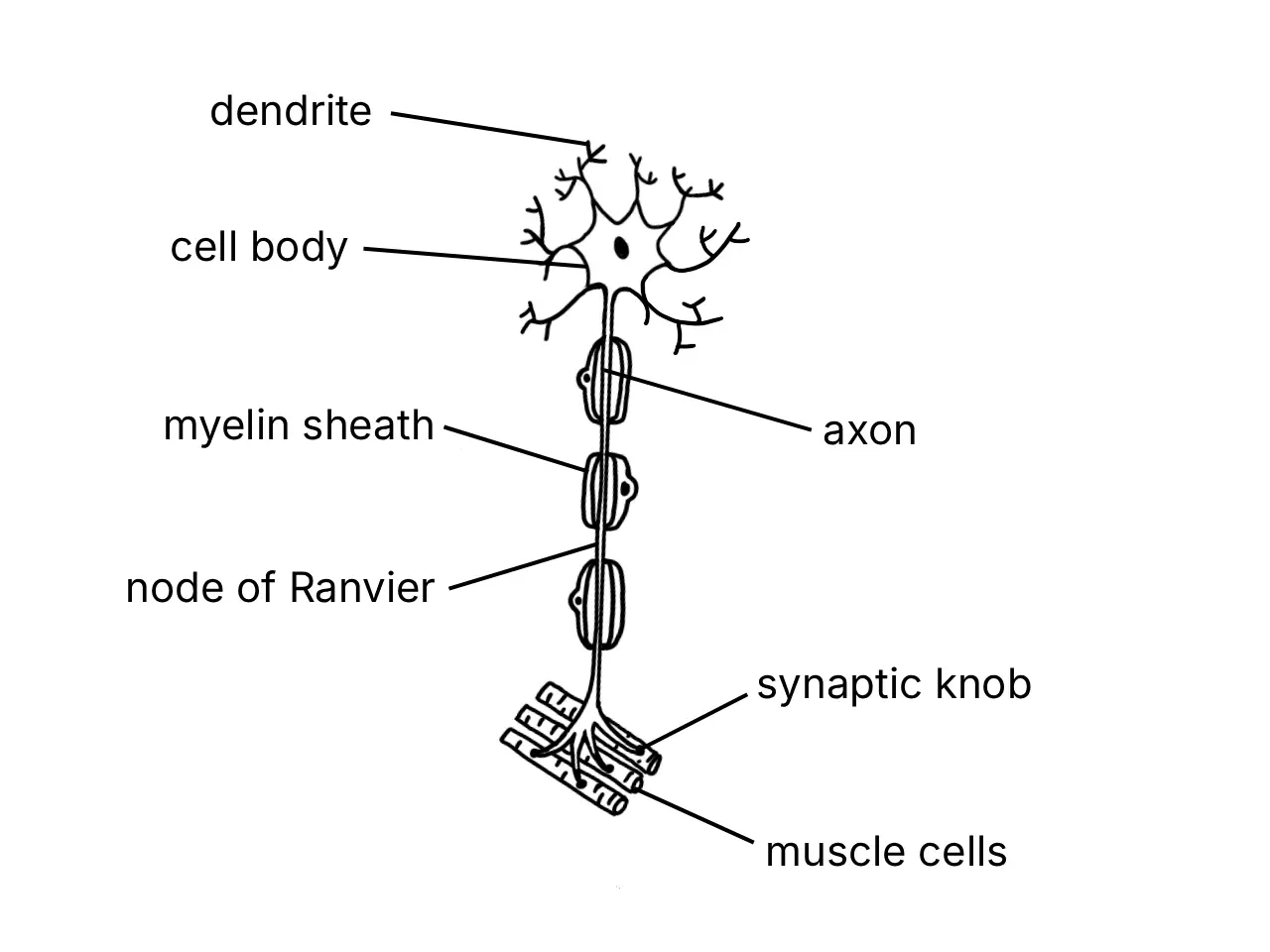
- Dendrites: Short branches that receive nerve impulses and send them to the cell body.
- Cell body: Contains a nucleus and dendrites; integrates signals and coordinates metabolic activities.
- Axon: Elongated branch that carries impulses out of the cell body to other neurones or effectors.
- Myelin sheath: Insulating membrane that coats the axon, protects the neurone, insulates electrical impulses and supplies nutrients to the axon.
- Node of Ranvier: Regular gap not insulated by myelin; accelerates impulse flow by allowing impulses to jump from one node to the next.
- Synaptic knob: Swelling at the end of an axon branch that sends signals to muscle cells, gland cells or dendrites of other neurones.
Types and Functions of Neurones
Sensory Neurone
- Located in the dorsal root of the spinal nerve.
- Carries impulses from sensory organ receptors to the central nervous system.
- Cell body is in the dorsal root ganglion.
Relay Neurone
- Nerve fibre located in the central nervous system.
- Connects sensory neurones to motor neurones.
- Cell bodies occur in clusters in the grey matter of the central nervous system.
- Sends impulses from sensory neurones to the central nervous system and from the central nervous system to motor neurones.
Motor Neurone
- Located in the ventral root of the spinal nerve.
- Receives impulses from relay neurones and sends them to effectors such as muscles or glands.
- Cell body is in the grey matter of the spinal cord.
Synapse
- A synapse is the narrow gap separating a synaptic knob from the dendrite of the receiving neurone.
- Synapses allow impulses to travel in one direction and control the types of impulses that pass through them.
- Transmission across a synapse is slow because it occurs chemically.
Transmission of Impulses Across a Synapse
- An electrical impulse reaches the synaptic knob.
- Synaptic vesicles release neurotransmitters into the synapse.
- Neurotransmitters diffuse across the synapse and bind to specific receptor proteins on the dendrite of the receiving neurone.
- The binding initiates the next electrical impulse in the receiving neurone.
- Examples of neurotransmitters: acetylcholine, noradrenaline, serotonin and dopamine.
- Synaptic knobs contain many mitochondria to generate energy for nerve impulse transmission.
Answer practice questions to test your knowledge
Practice