Coordination and Response in Humans
12.2 - Nervous System
Organisation of the Human Nervous System
- Central nervous system: Brain and spinal cord.
- Peripheral nervous system: Sensory receptors, 12 pairs of cranial nerves and 31 pairs of spinal nerves.
- Cranial nerves send nerve impulses from and to the brain.
- Spinal nerves send nerve impulses from and to the spinal cord.
Brain
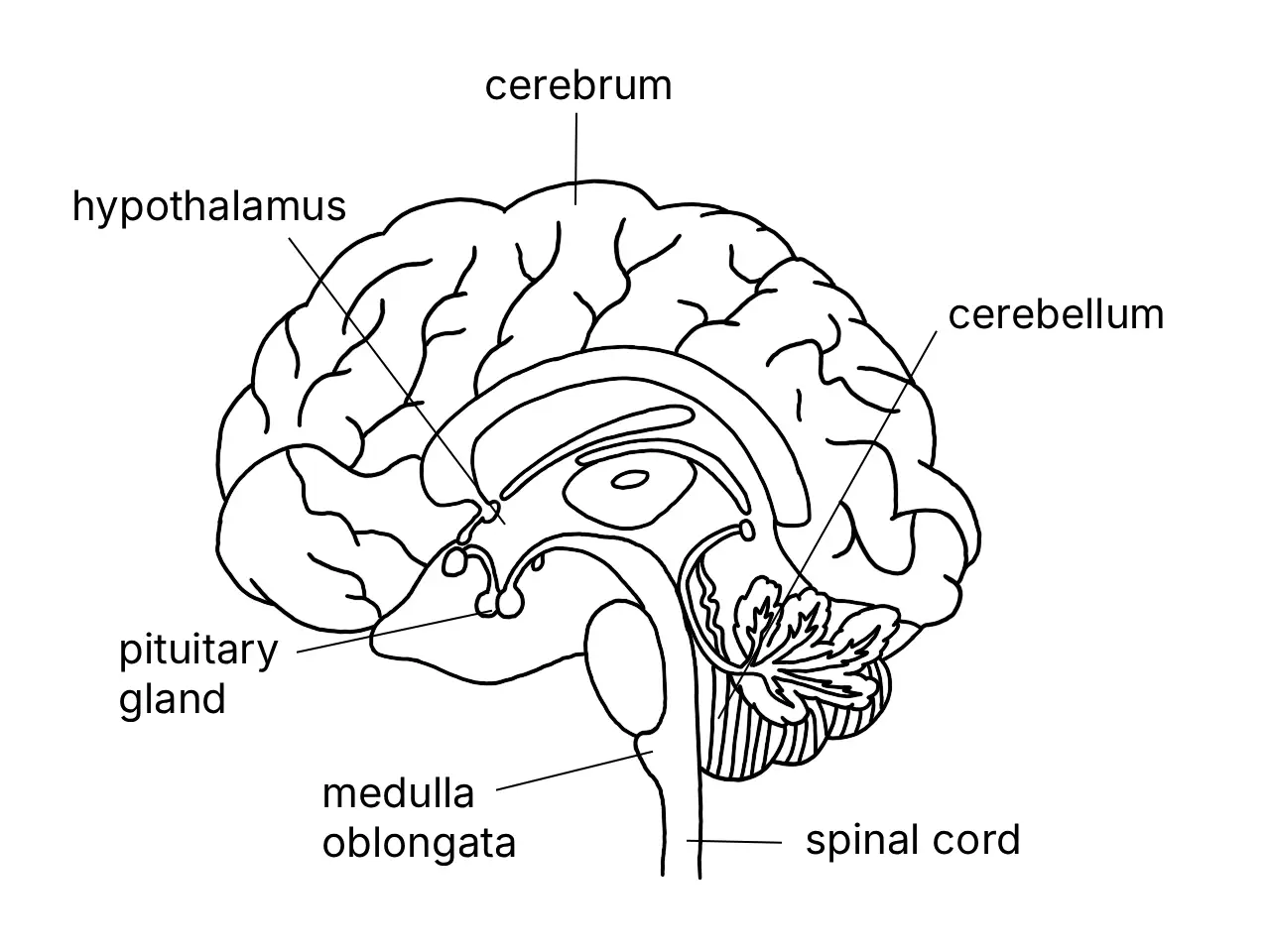
Cerebrum
- Largest and most complex structure at the front of the brain.
- Controls emotions, hearing, sight, personality and voluntary actions.
- Receives, analyses, integrates and correlates information from receptors to produce sensory perception.
- Determines responses and sends instructions to effectors.
- Responsible for higher mental abilities, including learning, memory, linguistic skills and mathematical skills.
Cerebellum
- Coordinates body balance and muscle contraction for body movement.
Hypothalamus
- Maintains homeostasis.
- Regulates body temperature, water balance and blood pressure; senses hunger, thirst and fatigue.
- Connects the nervous system to the endocrine system through the pituitary gland.
- Controls the secretion of some pituitary hormones.
Pituitary Gland
- Located at the base of the hypothalamus.
- Main endocrine gland; secretes hormones that control hormone secretion by other endocrine glands.
Medulla Oblongata
- Located in front of the cerebellum.
- Controls involuntary actions: heartbeat, breathing, food digestion, vasoconstriction, blood pressure, peristalsis, vomiting, coughing, sneezing and swallowing.
Spinal Cord
- Contained within the vertebral column and surrounded by cerebrospinal fluid, which protects and supplies nutrients.
- Grey matter: Butterfly- or H-shaped central region made mainly of cell bodies.
- White matter: Surrounds grey matter; contains myelin-coated axons extending up and down the spinal cord.
- Processes some sensory information and sends responses through motor neurones.
- Controls reflex actions and connects the brain to the peripheral nervous system.
Cross-section of the Spinal Cord
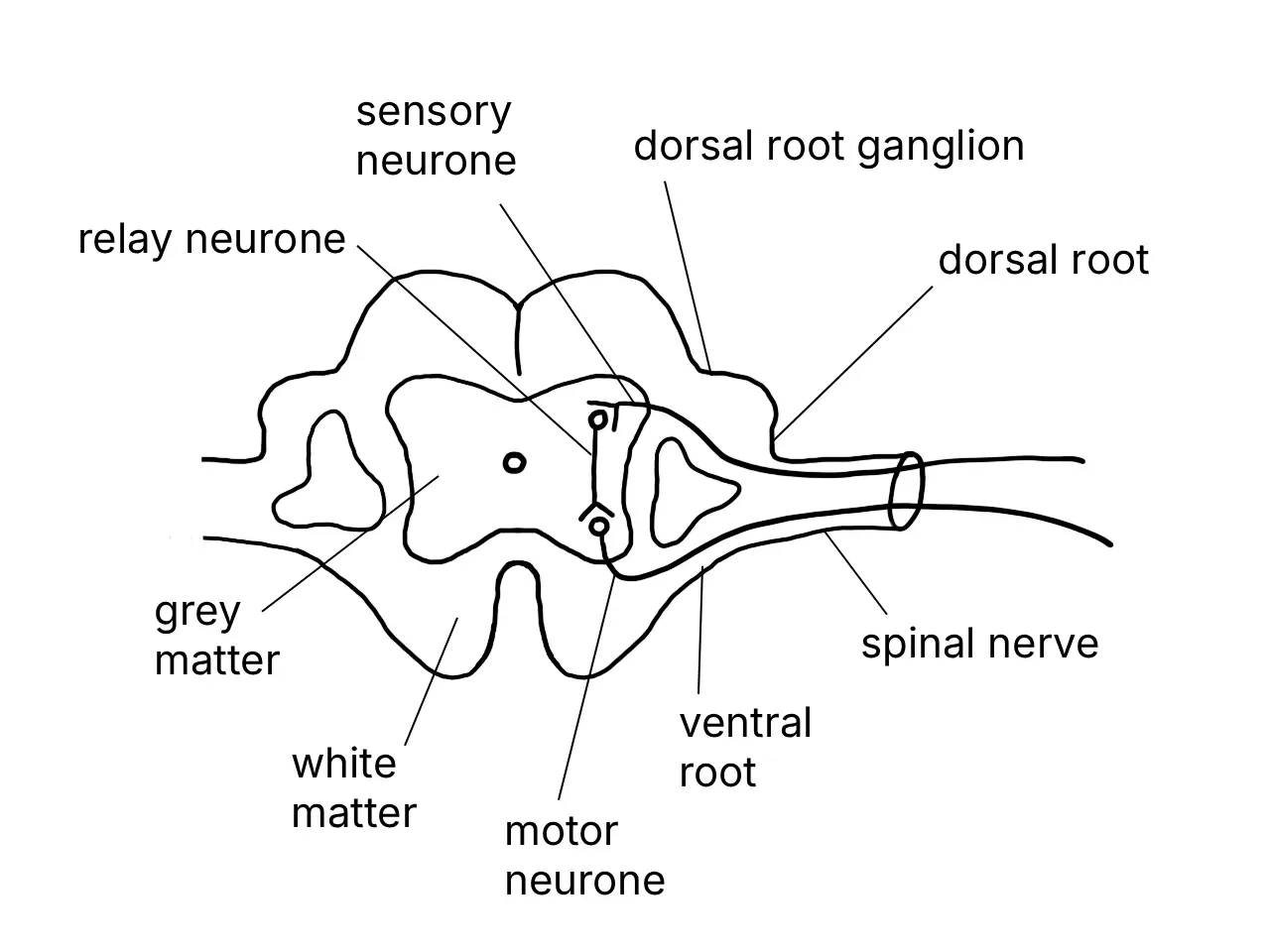
- Dorsal root: Contains sensory neurone axons that send impulses from sensory receptors to the spinal cord.
- Dorsal root ganglion: Contains clustered cell bodies of sensory neurones.
- Ventral root: Contains motor neurones that send impulses from the spinal cord to effectors.
- Spinal nerve: Contains sensory and motor neurones.
Peripheral Nervous System
- Connects sensory receptors and effectors to the central nervous system.
- Somatic nervous system: Regulates voluntary actions.
- Autonomic nervous system: Controls involuntary actions such as heartbeat and blood-vessel contraction.
Answer practice questions to test your knowledge
Practice