6.4 - Development of Seeds and Fruits
Double Fertilisation and Development of Seeds and Fruits
Development of the Embryo and Endosperm
- The triploid endosperm nucleus divides by mitosis to form endosperm tissue.
- Endosperm tissue stores food, surrounds the embryo, and supplies nutrients to it.
- The zygote divides by mitosis to form a larger cell and a smaller cell.
- The larger cell develops into a suspensor, which anchors the embryo to the wall of the embryo sac.
- The smaller cell develops into an embryo consisting of the plumule, radicle, and cotyledon.
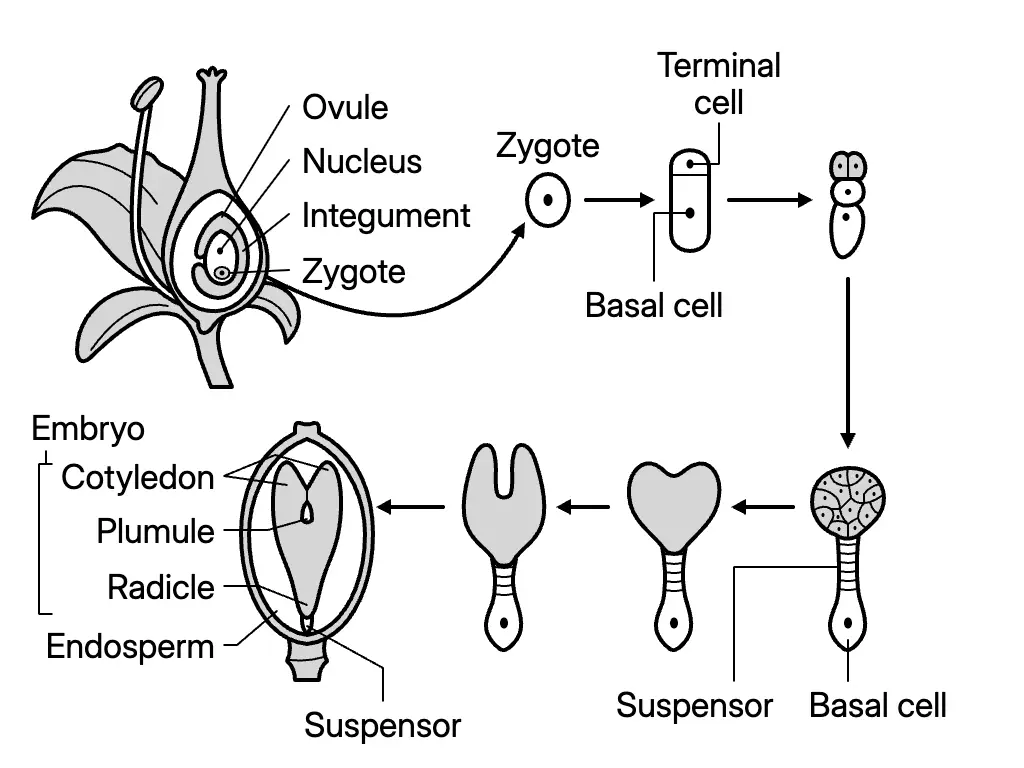
Relationship between Seed Structure and Ovule Structure
- Ovule seed.
- Integument two layers of seed coat that protect the embryo.
- Zygote embryo.
- Triploid endosperm nucleus endosperm tissue.
Relationship between Fruit Structure and Ovary Structure
- Ovary fruit.
- Ovary wall fruit pericarp, consisting of the exocarp, mesocarp, and endocarp.
- Stigma and style degenerate and leave a scar on the ovary wall.
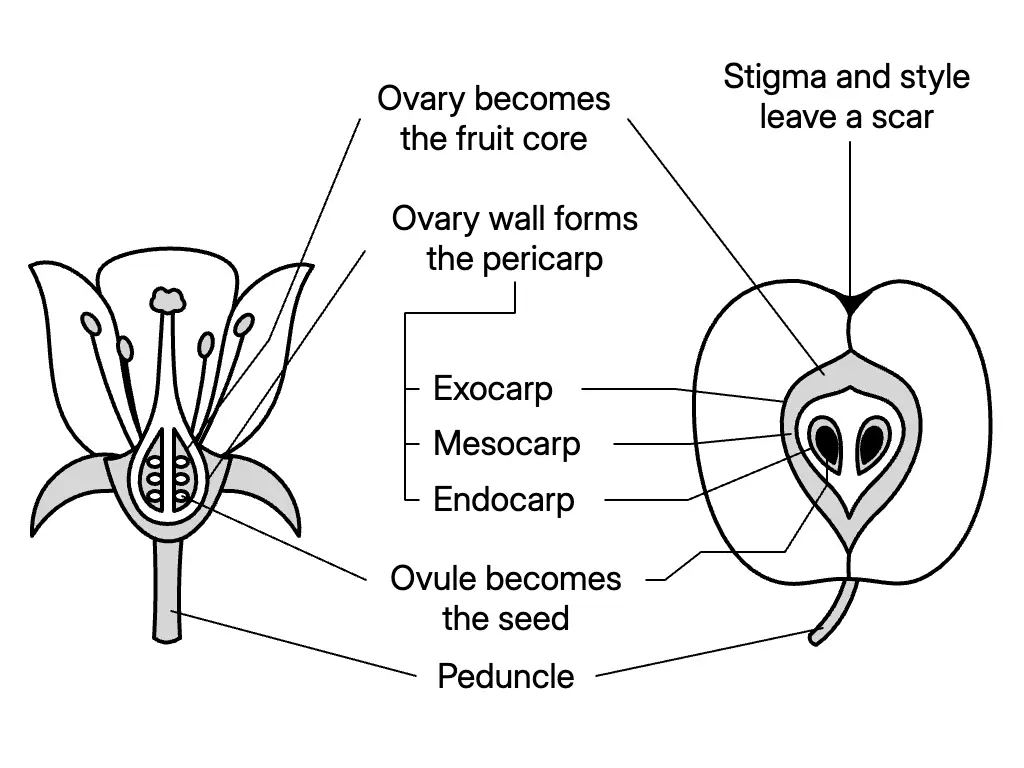
Types of Fruits
Classification by Origin
| Type | Development |
|---|---|
| Simple fruit | From a single carpel or several fused carpels in one flower; for example, pea |
| Aggregate fruit | From numerous carpels in one flower; for example, raspberry |
| Multiple fruit | From carpels of a cluster of flowers; for example, pineapple |
| Accessory fruit | From tissue outside the ovary but near the carpel; for example, apple |
Answer practice questions to test your knowledge
Practice